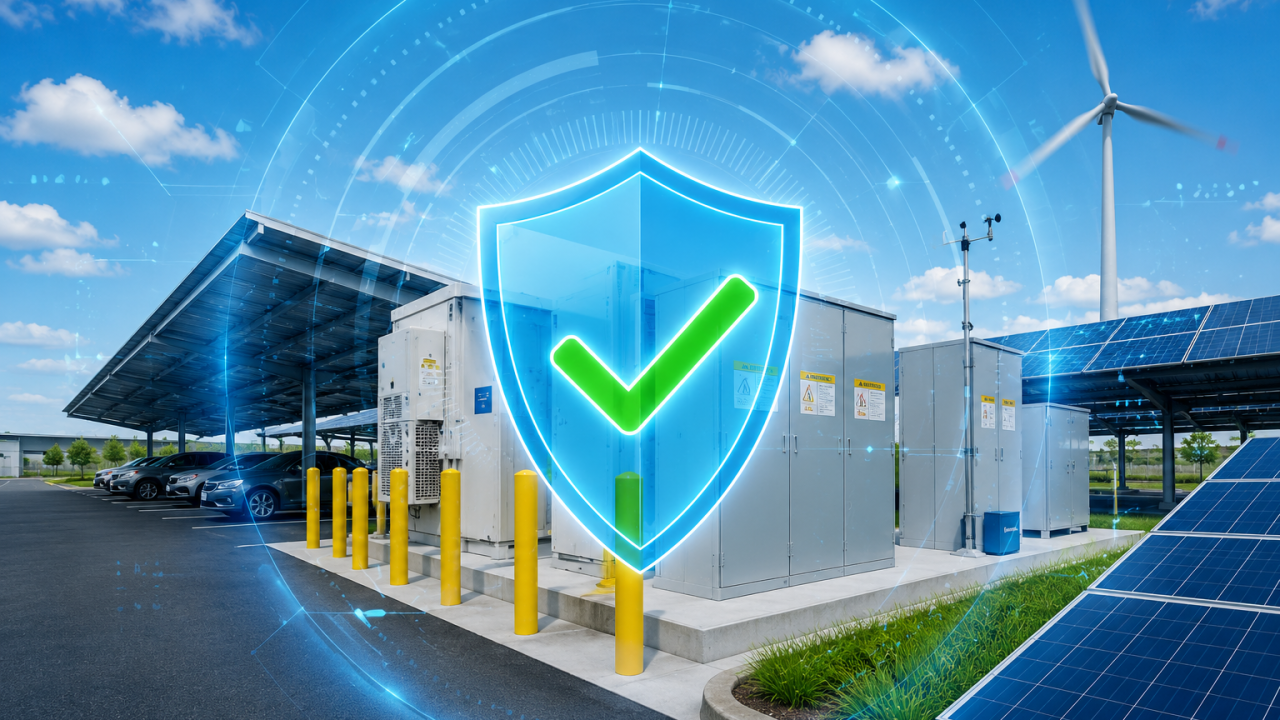
As battery energy storage systems (BESS) transition from niche assets to mainstream grid infrastructure, the regulatory landscape governing their installation has grown commensurately complex. For enterprises planning to install industrial and commercial (I&C) energy storage power stations, navigating the multi-layered approval framework — spanning project registration, environmental clearances, fire safety, electrical inspections, and grid interconnection — is as critical as the technical design itself. Missteps in the approval phase routinely delay commissioning by months and can expose project owners to legal and financial risk.
This article provides a structured walkthrough of the key approval procedures required across each phase of and C&I BESS project lifecycle, with specific focus on India’s regulatory regime and references to global best practices.
Phase 1: Pre-Project Feasibility and Site Assessment
Before a single approval form is filed, a structured feasibility assessment lays the groundwork for a defensible regulatory submission.
Site Selection and Technical Viability
The site must be assessed for proximity to existing electrical infrastructure, load access points, land classification, and grid connection feasibility. For C&I applications, regulators and utilities expect the proposed location to avoid dense occupancy zones, minimize cable routing distances to the main power distribution room, and allow adequate emergency vehicle access.
A technical feasibility study should produce:
- System sizing (power in kW/MW; energy in kWh/MWh)
- Grid capacity study and interconnection voltage level (LV/MV/HV)
- Site layout with container placement, setbacks, and fencing
- Preliminary Single-Line Diagram (SLD)

Engagement with the Authority Having Jurisdiction (AHJ)
A pre-application meeting with the AHJ — which in India includes the DISCOM, Chief Electrical Inspector to Government (CEIG/EI), and local municipal body — is strongly recommended before formal submissions begin. Early engagement helps identify jurisdiction-specific requirements that may not be evident from published guidelines and reduces the risk of application rejection.
Phase 2: Project Registration / Filing
Nodal Authority Registration
In India, the first formal approval step for an C&I BESS project is project registration on the local Development and Reform Bureau (in NDRC-analogous frameworks) or the respective State Energy Department / nodal agency portal. The enterprise submits:
- Project description and capacity
- Land ownership documents or lease agreements
- Proposed interconnection voltage and utility point

Under India’s National Framework for Promoting Energy Storage Systems (2023), standalone ESS owners and developers must also register with the Central Electricity Authority (CEA) with capacity and location details, and meet safety requirements set by the CEA.
Power Sanction / Load Sanction from DISCOM
A formal power sanction application must be filed with the relevant Distribution Company (DISCOM) for a new or augmented grid connection. This includes:
- Application form with technical specifications
- SLD of the proposed installation
- Details of proposed metering arrangements

For HT (High Tension) connections above 11 kV, enterprises in states like Maharashtra must apply through dedicated utility portals (e.g., i-SMART for MSEDCL). For installations integrated with renewable energy, applicable net-metering or grid-interactive regulations (e.g., MERC Grid-Interactive Regulations 2019, amended 2024) govern the connectivity process.
Phase 3: Electrical Drawing Approval and CEIG/EI Clearance
This is one of the most critical — and often underestimated — approval milestones for C&I energy storage installations in India.
Plan Approval Before Installation Commencement
For electrical installations above 500 kVA, the Single Line Diagram (SLD) indicating all protections, changeover switches, and apparatus must be approved by the Chief Electrical Inspector (CEI/CEIG) before commencement of electrical works. This pre-installation drawing approval is a statutory requirement under the CEA (Measures relating to Safety and Electric Supply) Regulations, 2010.
Documents submitted at this stage typically include:
- SLD with protection scheme details
- Equipment list (make, model, serial number, ratings)
- Earthing layout and calculation
- Licensed electrical contractor’s credentials
- Demand notice / power sanction copy from DISCOM

For installations with connected load above 33 kV, the application is directed to the Chief Electrical Inspector (CEI) Office; for other HT installations, to the Electrical Inspector Office of the state.
Post-Installation Inspection for Energisation Approval
Once the installation is complete, the owner or authorized representative submits an inspection application (Forms A-1, B-1, A-2, or B-2 as applicable) to the Electrical Inspector, along with:
- Completion and Test Report from the licensed electrical contractor
- Manufacturer’s test certificates and invoices for equipment
- Fire NOC from the Fire Department / fire extinguisher test certificate
- Treasury challan for inspection fees
- Copies of statutory clearances from other authorities (Forest, Railways, Defence, Civil Aviation, Highways, as applicable)

The Regulation 43 certificate issued by the Electrical Inspector is the final statutory clearance needed before energisation and grid connectivity.
CEIG Approval — Step-by-Step Process
- Application Submission: Submit prescribed form + technical documents to CEIG office
- Document Review: Authorities verify SLD, earthing reports, contractor and supervisor licenses, safety and test certificates, Fire NOC, and other statutory clearances
- Site Inspection: Inspection of installation, protection systems, switchgear panels, transformers, and earthing arrangements against CEA safety regulations
- Compliance Rectification: Any deficiencies identified must be corrected before re-inspection
- Approval Certificate: Upon satisfactory compliance, CEIG clearance is granted — enabling legal energisation and grid connectivity
Phase 4: Fire Safety Approval
Fire safety approvals for BESS installations are among the most technically rigorous and increasingly formalized requirements globally and in India.
Provisional Fire NOC (Pre-Construction Stage)
Before construction begins, enterprises must obtain a Provisional Fire NOC from the local Fire Department. This is issued based on:
- Architectural and building drawings
- Block plan showing location of fire suppression systems, fire lanes, Knox boxes, and utility meters
- Brief note on activities and process flow
- Description of fire prevention and protection measures

For industrial and storage buildings, a detailed process flow chart of the plant certified by an authorized person must be submitted alongside the drawings.
Final Fire NOC (Pre-Commissioning Stage)
After installation is complete and before energisation, a Final Fire NOC is obtained following physical inspection by the Fire Department. Key verification points include:
- Installed fire detection and suppression systems (aerosol suppression, automatic sprinklers, gas detection)
- Emergency response plan compliant with applicable fire codes
- Smoke and heat detection systems
- Access routes for fire and emergency services
CEA’s Independent Third-Party Fire Safety Audit (India-Specific, 2025–26)
In December 2025, the Central Electricity Authority (CEA) released a Draft Standard Operating Procedure (SOP) for a mandatory Independent Third-Party Fire Safety Audit for BESS installations. Key provisions of this draft SOP include:
- Primary responsibility for fire safety compliance lies with the BESS owner
- Owners must arrange fire safety audits through Independent Third-Party Agencies (ITPAs) and obtain fire safety approval before applying for first-time energisation
- A copy of the fire safety audit report must be submitted along with the energisation application
- Periodic audits are required during the operational life of the project

Additionally, the CEA’s Draft CEA (Measures relating to Safety and Electric Supply) (First Amendment) Regulations, 2025 propose a new Chapter X-A titled “Additional Safety Requirements for Battery Energy Storage Systems,” covering battery container safety, equipment location, ventilation, hazard detection, electrolyte spillage management, lighting and signage, security systems, emergency stops, and earthing.
Key Fire Safety Technical Requirements

Phase 5: Environmental and Land Use Approvals
Environmental Impact Assessment (EIA)
The requirement for a formal Environmental Impact Assessment (EIA) depends on the system’s capacity, location, and whether it involves greenfield development:
- Small-scale I&C systems (< a few hundred kWh) installed at existing facilities generally do not require a full EIA, as the environmental footprint is limited
- Larger standalone systems (especially greenfield installations) may require Environmental Impact Statements covering risk to water, air quality, and surrounding land uses
- In India, environmental clearances from the State Pollution Control Board (consent to operate under Air and Water Acts) are required for larger energy projects
Other Environmental Clearances (India)
Depending on site characteristics, the following may be required:
- NOC from local Municipal Committee or Panchayat
- Approval from the Central Ground Water Board for bore wells
- Forest Department approval if approach road traverses forest land
- NHAI approval for approach road to the National Highway, if applicable
- Approval from the Chief Controller of Explosives for diesel storage during construction

Land Use / Zoning Permit
Before construction begins, zoning compliance must be confirmed. For I&C BESS:
- Systems up to a capacity threshold (often 80–600 kWh in international frameworks) may be permitted by right in commercial and industrial zones
- Larger systems typically require a Special Use Permit (SUP) or Conditional Use Permit (CUP), and may be restricted to industrial or manufacturing zones
- Sites must meet setback requirements from lot lines, public roads, occupied buildings, and overhead power lines
- In India, municipal building plan approval and layout sanctions from the local Urban Local Body (ULB) are required before physical construction starts
Phase 6: Building Permit and Construction Authorization
Building Permit
A formal building permit from the local municipal authority (Nagar Palika, Municipal Corporation, or equivalent ULB) is required for any civil construction associated with the BESS installation, including:
- Container pad / slab construction
- Transformer yard and substation structures
- Boundary fencing and access roads
- Drainage and stormwater management systems

Documents required typically include:
- Site layout plans with container placement, transformer pad, and fencing
- Elevation drawings
- Structural slab calculations
- Stormwater management design
- Noise impact assessment
Electrical Permit
Separate from the CEIG drawing approval, a formal electrical permit from the local authority is required before electrical works commence. This covers wiring, conduit installations, metering, and switchgear. Construction documents must be prepared or stamped by a licensed electrical engineer and include:
- One-line or three-line electrical diagrams
- Equipment specification sheets
- Installation instructions

Phase 7: Product and Technology Certifications
The BESS equipment itself must carry mandatory certifications before it can be installed and approved.
BIS Certification (India-Mandatory)
All BESS battery packs installed in India must be tested at BIS-recognised laboratories and obtain BIS Compulsory Registration Scheme (CRS) approval under IS 16270:2023. BIS CRS registration is non-negotiable — it cannot be waived even under temporary policy relaxations.

International Safety Standards
For system-level compliance, the following certifications are globally recognized and expected by AHJs:

Make in India / DPIIT Compliance
For government-procured BESS projects or VGF-supported projects, compliance with Public Procurement (Preference to Make in India) Orders is mandatory. VGF-supported projects must maintain a minimum 20% local content, including indigenous EMS software. A temporary relaxation was granted from January 2026 to January 2027 for projects using lithium-ion cells under Transfer-of-Technology (ToT) arrangements, easing the strict DPIIT registration requirement.
Phase 8: Grid Interconnection and Utility Approval
Grid interconnection is a multi-step technical and regulatory process governed by the CEA, CERC/SERCs, and the respective DISCOM or State Transmission Utility (STU).
Connectivity Application (India)
Under the CEA (Technical Standards for Connectivity to the Grid) Regulations, 2007 (as amended in 2019), BESS projects seeking grid connectivity at 33 kV and above must submit a formal connectivity application to the CTU/STU. The step-by-step process for CTU/STU approval in India includes:

For DISCOM-level connectivity at LV/MV, the process follows the respective state’s grid-interactive regulations and involves the DISCOM’s feasibility study, SLD approval, and signing of a connection agreement.
Interconnection Voltage and Timeline

NLDC/SLDC Registration and Communication Parameters
For systems above a threshold that participate in grid ancillary services, SLDC/NLDC communication and scheduling parameters must be configured and submitted before commissioning. Projects must comply with the Indian Grid Code (IGC) and CERC/SERC Regulations on scheduling, metering, and deviation settlement.
Phase 9: Commissioning Approval
Commissioning is the final technical gate before the system goes live. It involves both internal validation and external regulatory sign-off.
Commissioning Plan Submission
A formal commissioning plan must be submitted to the project owner (or the DISCOM/CTU/STU, as applicable) before commissioning activities begin — typically at least 60 days prior to the first commissioning test. The plan must cover:
- Documentation review and site readiness checklist
- Subsystem commissioning: BMS, PCS, EMS individual sign-offs
- Joint system commissioning plan
- Emergency response plan for commissioning phase
Factory Acceptance Testing (FAT)
Before shipment, the BESS vendor is required to conduct a Factory Acceptance Test (FAT), which is commonly witnessed by the utility, project owner, or a qualified third party. FAT results must be reviewed and any deficiencies resolved before equipment is shipped to site.

Site Acceptance Testing and Commissioning Sign-Off
On-site commissioning involves:
- Subsystem Tests: BMS, PCS, EMS individual functional checks
- Electrical Tests: Protection relay testing, earthing verification, insulation resistance measurement
- Communication Tests: SCADA, EMS-SLDC communication, telemetry validation
- Performance Tests: Charge/discharge cycling, round-trip efficiency, response time
- Safety Tests: Thermal runaway simulation, fire suppression activation, emergency stop verification
- Grid Integration Tests: Anti-islanding, fault ride-through, reactive power control
Final sign-off is obtained from the DISCOM or STU/CTU for energisation, and from the Fire Department and CEIG/EI for operational clearance. In India, the Regulation 43 Energisation Certificate from the Electrical Inspector is the definitive authority to commence supply.
Phase 10: Operational Permits and Ongoing Compliance
Operational Permit
Once commissioned, the BESS requires an operational permit that is renewed periodically. In India and most jurisdictions, this requires:
- Completed application with operational description, site map, and building floor plan
- Emergency response plan
- Fire suppression and alarm system inspection records
- Energy storage management system details
Periodic Inspections and Safety Audits
Under the CEA’s draft SOP for BESS fire safety, periodic third-party fire safety audits must be conducted throughout the operational life of the project. Routine inspections by the Electrical Inspectorate under Regulation 30 (Periodic Inspection and Testing) are also mandatory.

Incident Reporting
In the event of any fire or safety incident, the BESS owner is required to inform the CEA, the local electrical inspector, and emergency services as per the stipulated procedure.
Augmentation and Capacity Changes
Any augmentation of battery capacity — through additional racks, containers, or technology upgrades — requires re-notification to the AHJ. Under model ordinances globally, project owners must provide at least 90 days’ prior notice before commencing augmentation activities. In India, changes above a material threshold require fresh CEIG drawing approval and may trigger re-inspection.
Consolidated Approval Checklist for I&C BESS Projects (India)

Key Regulatory Developments to Watch (2025–2026)
Several regulatory developments are actively reshaping the approval landscape for BESS in India and globally:
- CEA Draft Safety Regulations (2025): The proposed Chapter X-A of the CEA Safety Regulations introduces mandatory two-fault tolerance for BMS design, ventilation and gas detection requirements, and site-specific fire and explosion protection for BESS. Once finalized, these become statutory requirements for all new I&C installations.
- CEA Draft SOP for Independent Fire Safety Audit (December 2025): Mandates third-party fire safety audits before first-time energisation and periodically during operations — a significant new compliance layer.
- Make in India Relaxation (January 2026 – January 2027): Temporary waiver of DPIIT registration requirements for ToT-based lithium-ion cell projects. Enterprises should plan for full compliance restoration from February 2027.
- ISTS Transmission Charge Waiver: BESS projects co-located with RE and commissioned on or before 30 June 2028 receive a full waiver of inter-state transmission system charges — a significant cost benefit that hinges on timely approvals.
- EU Streamlining Directive: Effective 2025, the European Union has removed administrative permit requirements (other than grid connection permits) for standalone storage systems ≤ 100 kW — setting a precedent for simplified approval for small C&I systems.
Conclusion
The approval process for industrial and commercial energy storage power stations is a structured, multi-phase journey requiring careful sequencing, proactive AHJ engagement, and thorough document management. For Indian enterprises, the critical path runs from project registration and DISCOM power sanction → CEIG SLD approval → building permit and provisional fire NOC → equipment BIS certification and FAT → grid connectivity study and approval → third-party fire safety audit → post-installation electrical inspection and Regulation 43 certification → SLDC/NLDC commissioning clearance.

Understanding this sequence — and initiating parallel tracks wherever possible — can reduce the overall pre-commissioning timeline significantly. With the regulatory framework rapidly evolving through CEA’s 2025 draft safety regulations and the new fire safety audit SOP, enterprises should engage compliance specialists early and build regulatory milestones directly into their project schedules.
No Responses