Introduction
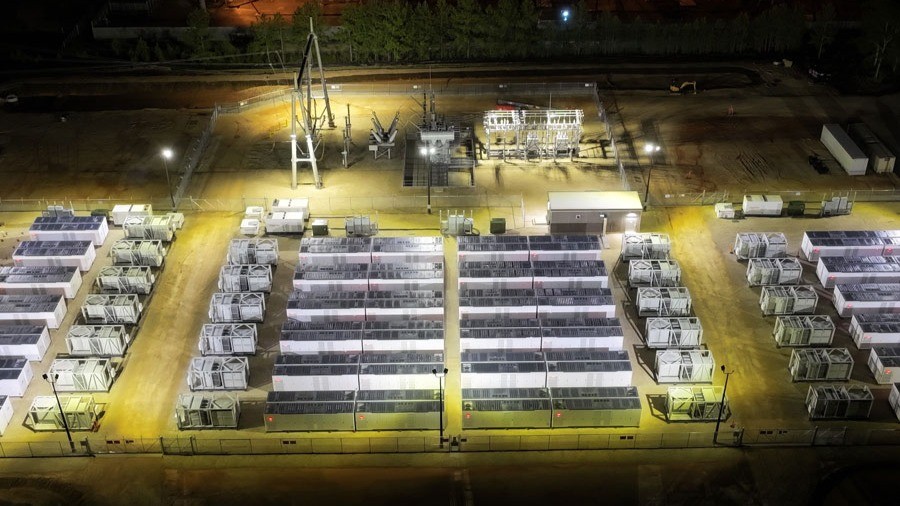
When the grid goes dark, the real test begins — not for solar panels or wind turbines, but for the systems capable of waking everything else up. Black start capability is the ability of a power system to restore itself from a completely de-energized state without relying on external grid supply. For decades, this function belonged exclusively to diesel generators, gas turbines, and hydropower plants. Today, Battery Energy Storage Systems (BESS) are stepping into this role — and doing so more cleanly, more rapidly, and with greater economic versatility.
But BESS-based black start is not simply about swapping out a diesel genset with a lithium-ion rack. It involves a fundamental inversion of how a plant energizes itself, a complete rethink of inverter control philosophy, and a set of engineering challenges that demand meticulous design. This article digs into what black start from BESS truly requires — architecturally, electrically, operationally — and where the hardest problems lie.
What Black Start Actually Means for BESS
Under normal grid-connected operation, a BESS plant energizes from the grid inward. The grid provides voltage at the Point of Interconnection (POI), and the plant’s equipment powers up from the high-voltage side through the medium-voltage network to the DC blocks. The PCS operates in grid-following mode, synchronizing to the grid’s voltage and frequency reference.

During a black start, this direction reverses entirely. Energization starts from the battery side and moves outward toward the load or the grid. A “black start capable” label on a PCS datasheet does not mean the plant can perform a black start — it requires grid-forming control on the PCS, an auxiliary power strategy for all internal systems, and infrastructure designed to energize in the correct sequence without any external voltage reference.
The key use cases where BESS black start matters include:
- Backup power for critical infrastructure — hospitals, data centers, military installations, or industrial facilities that cannot tolerate grid-dependent restoration
- Auxiliary cranking power for thermal generation — gas turbines and combined-cycle plants require startup power from the BESS before they can begin their own ignition sequences
- Weak grid and remote site energization — where grid voltage is insufficient or unstable at the point of connection, a BESS must self-energize and then synchronize once internal systems stabilize
- Grid restoration support — Transmission System Operators (TSOs) may require a BESS plant to self-energize and help restore sections of the transmission network following a widespread blackout.

The Foundational Requirement: Grid-Forming Inverters
Every black start-capable BESS must be equipped with a grid-forming (GFM) inverter. This is non-negotiable. In a blackout, there is no grid voltage or frequency reference — which makes grid-following (GFL) inverters inoperable, as they need an existing signal to synchronize with. A GFM inverter creates the voltage waveform and establishes frequency from scratch using an internal oscillator rather than a Phase-Locked Loop (PLL).
Grid-forming control is commonly implemented through Virtual Synchronous Machine (VSM) or Virtual Synchronous Generator (VSG) architectures, which emulate the stabilizing behavior of a spinning synchronous generator using power electronics. These algorithms give the BESS “digital inertia” — when frequency deviates, the inverter automatically adjusts power output to oppose the change, mimicking the rotational momentum of a 50-ton turbine rotor.
The difference between GFM and GFL is critical:

An important nuance: GFM capability does not automatically confer black start capability. A grid-forming PCS designed for grid-connected operation may lack the control modes or hardware interfaces needed for a cold start from zero. Every black start also requires an auxiliary power strategy, startup logic, and a sequencing design — covered below.
Design Challenge 1: Auxiliary Power and the Self-Start Sequence
The PCS cannot begin generating AC power until the plant’s internal systems are already operational — and those systems need power from somewhere. This “bootstrap” problem is the first design challenge that separates a black start-capable BESS from a standard grid-connected system.
The systems that require power before the PCS can start include:
- Battery Management System (BMS) — must be active before the DC bus can be energized; it monitors cell voltages, temperatures, state of charge, and controls the contactors connecting battery strings to the DC bus
- Control systems and SCADA — the plant controller, EMS, and communication systems need to be fully operational before any switching or energization can begin
- HVAC and thermal management — cooling and HVAC systems must be running before or shortly after energization begins, depending on ambient conditions
- Breaker control and auxiliary circuits — circuit breakers throughout the plant require auxiliary power to operate their control circuits, motor drives, and position indicators

The design decision centers on how these systems receive their initial “heartbeat” power. The two most common approaches are:
- Dedicated UPS systems — installed at DC blocks, PCS controls, and the power plant controller/SCADA level; these provide initial power for control and monitoring systems before the black start sequence begins
- Auxiliary diesel generator — a small on-site diesel genset supplies auxiliary power before the PCS starts; once the PCS is generating AC power, it feeds the plant’s auxiliary system directly, replacing the diesel supply

The auxiliary power strategy must be designed into the plant from inception — it cannot be retrofitted. For projects targeting zero-emission operation, the challenge is avoiding any diesel dependency, which drives the need for adequately sized UPS banks and battery-backed control systems.
Design Challenge 2: The Energization Sequence and Transformer Inrush
Once auxiliary systems are live and the BMS confirms battery string readiness, the DC bus is energized and the PCS begins generating an AC voltage waveform in GFM mode. From there, energization progresses outward through the low-voltage AC cabling, the medium-voltage transformer, the medium-voltage Ring Main Unit (RMU), and the medium-voltage cables connecting the rest of the plant.

The most electrically violent moment in this sequence is transformer energization. When the GFM inverter hits a large power transformer, it creates an “inrush current” that can be 8 to 10 times the rated current for short intervals. Unlike a synchronous generator, which has high short-circuit current capability to absorb these transients, a BESS inverter typically delivers only 1.2 to 1.5 times rated current — dramatically insufficient without additional mitigation.

Two problems arise simultaneously:
- Protection tripping — overcurrent relays and transformer differential relays (87T) may interpret inrush as a fault and disconnect the circuit before energization is complete
- Harmonic distortion — the magnetizing inrush draws non-linear current, producing significant harmonics that can propagate through the emerging microgrid and impair the functionality of other connected equipment

Mitigation strategies that have been validated in practice include:
- Soft-start (V/f ramp) — the GFM inverter ramps voltage from 0% to 100% slowly over several seconds rather than applying full voltage instantaneously; this is the primary technique and has been validated in field tests portal.
- Harmonic filtering — large passive or active harmonic filters at the BESS output can absorb inrush-related harmonics; one documented black start project incorporated a large harmonic filter to resolve the short-circuit current challenge.
- Point-on-Wave (PoW) switching — closing the transformer breaker at a specific point in the voltage waveform (typically the zero-crossing) minimizes the magnetic flux offset that drives inrush; this requires high-speed, electronically controlled breakers.
- Harmonic restraint in relays (87T) — transformer differential relays should be configured with 2nd harmonic restraint and inrush blocking, with sensitivity thresholds tuned based on commissioning data.

EMT (Electromagnetic Transient) simulation using tools such as PSCAD is essential to study these phenomena before commissioning, including energization of transformers under different remanent flux conditions and worst-case switching scenarios.
Design Challenge 3: SOC Management and Sizing
BESS black start sizing is fundamentally different from sizing for energy arbitrage or frequency regulation. The system is sized not for energy (MWh) but primarily for power (MW) — specifically, the peak instantaneous power demand during the starting sequence including motor inrush, transformer magnetizing, SFC/LCI starting, and auxiliary loads.

Sizing must account for:
- Starting duty cycle — the number of turbine start attempts the battery must support within a defined time window; failed starts consume reserve
- Auxiliary power bridge — the energy needed between grid loss and successful turbine light-off
- Reserve depletion risk — if multiple start attempts fail, the reserved State of Charge (SoC) can be exhausted, destroying black start capability at the worst possible moment
The dominant operating challenge is SoC management when the BESS is simultaneously participating in energy markets. The “trade the top, lock the bottom” principle is the most widely adopted approach:
Top 70–80% of SoC: available for market participation (regulation, arbitrage, peak shaving) Bottom 20–30% of SoC: locked reserve dedicated exclusively to black start and critical auxiliaries
This reserve must be enforced not just operationally but through EMS/SCADA logic with hard limits, since grid operators have identified SoC uncertainty at the moment of system shutdown as a core systemic risk. Some battery chemistries degrade faster if maintained at consistently high SoC — requiring either selection of high-SoC-friendly chemistry (e.g., LFP), oversizing, or deliberate SoC cycling.
A practical sizing framework:

Design Challenge 4: Protection System Coordination
Protection system design for BESS black start is multi-layered and demands mode-specific settings. During a black start, power flow direction, fault current levels, and system impedance all differ from normal operation — standard protection schemes calibrated for grid-connected operation can fail or nuisance-trip during restoration.

The core technical challenges include:
Low fault current from IBRs: Inverter-based resources limit fault current to approximately 1.1–1.5 times rated current, compared to 5–10 times from synchronous generators. Traditional overcurrent protection (ANSI 50/51) becomes unreliable, requiring migration to differential protection (87) or distance protection (21).

Bidirectional power flow: During black start, the BESS is the source and the grid (or cranking path) is the load. Protection relays designed for unidirectional flow must be reconfigured with directional elements (67/67N) to correctly identify and respond to faults regardless of power direction.
Anti-islanding conflicts: Conventional anti-islanding schemes (voltage, frequency, ROCOF) are designed to detect and prevent unintentional islanding. During a black start, the BESS intentionally operates in an islanded state — these schemes must be disabled or bypassed during the black start mode and re-enabled before grid synchronization.

Mode-dependent protection settings: The system operates across multiple modes — grid-following, islanded/grid-forming, black start, and resynchronization — each with distinct fault current characteristics. This requires Group Setting Selection (GSS) in protection relays, with automated settings-group switching driven by the EMS/PMS.
Resonance issues can occur when energizing transformers, cables, and transmission lines during black start, particularly the Ferranti effect on lightly loaded long lines and harmonic resonance between cables and transformers. These must be studied using EMT simulation and mitigated through sequencing.
Design Challenge 5: Resynchronization with the Main Grid
After the BESS has successfully performed a black start and operated in islanded mode, returning to grid-connected operation requires precise synchronization — matching voltage magnitude, frequency, and phase angle at the Point of Connection (PoC) before closing the interconnection breaker.
A poorly executed resynchronization can introduce voltage or frequency transients that cause protection relays to trip the plant off the grid, negating the entire restoration effort. The resynchronization requirements vary by grid operator and connection agreement, with two main approaches:

- Hard reset — the plant de-energizes completely and re-energizes from the grid side in grid-following mode (simpler, but causes a supply interruption to loads)
- Live synchronization — the GFM inverter progressively matches its internal reference to the returning grid signal and closes the interconnection breaker without interruption (requires sync-check relay, phasor measurement, and PCS control mode transition from GFM to GFL)
The transition from GFM to GFL mode after synchronization must be seamless. Advanced control schemes using VSM/VSG logic can smooth this transition by gradually reducing the internal reference and handing control to the external grid.
Real-World Validation
BESS black start is no longer theoretical. Several landmark projects have demonstrated commercial viability:
- Imperial Irrigation District (IID), California — A ~33 MW / 20 MWh BESS successfully demonstrated black start capability for a ~44 MW combined-cycle gas facility at the El Centro Generating Station. Crucially, the same battery participated in daily frequency regulation and balancing — not reserved solely for emergencies.
- Entergy Louisiana, Perryville Power Station — GE Vernova documented battery-assisted black start of a heavy-duty 7F-class gas turbine, with the BESS sized to meet the starting duty and initial stabilization needs.

- Southern California Edison (SCE) — PSCAD-based EMT studies demonstrated that a grid-forming BESS could replace an LM6000 gas peaker as a black start resource, with voltage and frequency well within system limits throughout all restoration phases. SCE concluded that GFM BESS has strong potential as a future black start resource.
- Saudi Electricity Company (SEC) — Large-scale BESS under hostile desert conditions (extreme ambient temperatures) validated daily grid operation and black start capability, coordinating a grid-forming BESS with PV generation to restore and reconnect a transmission-level substation. Results confirmed fast response and stable behavior including transformer energization, frequency response, voltage stability, and synchronization with the main grid.
The Indian Regulatory Landscape
India’s regulatory framework is actively evolving to enable BESS black start participation. The CERC (Indian Electricity Grid Code) Regulations, 2023 (IEGC 2023), effective from October 1, 2023, specifically includes provisions under Regulation 34 governing black start support by inter-state and intra-state entities.

A landmark CERC order dated February 12, 2025 approved the “Detailed Procedure for Payment for Black Start Support” under Regulation 34(9) of the IEGC 2023. Key provisions include:
- Entities providing black start support — including BESS — are paid at 110% of the normal rate of deviation charges (DSM Regulations) for the last time block in which the grid was available during the disturbance
- Payment is made from the respective Regional Deviation and Ancillary Service Pool Account by RLDCs, with reconciliation within two months of the end of the financial quarter
- Both inter-state and intra-state entities are eligible, with ABT metering arrangement mandatory for qualification
Further, under the CERC (Ancillary Services) Regulations, 2022, energy storage systems have been made eligible to provide Secondary Reserve Ancillary Services (SRAS) and Tertiary Reserve Ancillary Services (TRAS), supporting real-time grid stability alongside black start functions. The Central Electricity Authority (CEA) has estimated a requirement of approximately 336 GWh of energy storage capacity by 2029–30 and about 411 GWh by 2031–32, with black start support explicitly identified as a service BESS must be capable of delivering.

Execution Challenges: From Engineering to Commissioning
Beyond the design domain, executing a BESS black start project introduces a distinct set of operational and commissioning challenges:
Testing requirements: Black start capabilities must be periodically tested and documented. In North America, NERC EOP-005-3 requires testing at least once every three years, with records including the resource name, test date, duration, and time required to start. India’s IEGC framework similarly mandates that identified black start entities maintain readiness and testing protocols. Testing involves simulating complete grid loss and verifying the full restoration sequence — a significant operational disruption that must be carefully planned.
Cybersecurity and communication resilience: A BESS black start system relies on SCADA, EMS, and PCS communication links. During a blackout, external communication networks may also be compromised. The plant’s control system must be capable of executing the black start sequence autonomously or with minimal operator intervention, with fail-safe logic designed for communication failure.

Thermal safety during black start events: Black start events are high-stress electrical moments — rapid discharge, inrush handling, and potential multiple failed attempts all push battery cells toward thermal limits. Thermal management systems must be sized and pre-conditioned for the peak-power demands of the starting sequence. NFPA 855 requirements for Li-ion enclosure ventilation, deflagration panels, and emergency response planning become especially critical in black start configurations co-located with gas turbine plants.
Operator training and restoration procedures: A technically sound system can fail if operators do not execute restoration procedures correctly. Grid operators’ restoration plans (as required under IEGC Regulation 34 and analogous NERC standards) must be documented, drilled, and maintained. Simulation and tabletop exercises are increasingly recognized as essential in high-stakes black start scenarios.
The Revenue Stacking Opportunity
The strongest business case for BESS black start is not building a dedicated black start unit — it is building a revenue-generating energy storage asset that also qualifies as a black start resource. This “do work every day” model transforms black start from an insurance cost into an economic opportunity.

Typical stacked value streams in hybrid black start BESS projects include:
- Frequency regulation / Fast Frequency Response (FFR) — the highest-value ancillary service for BESS in most markets
- Spinning reserve substitution — the battery carries fast response while thermal units operate more efficiently
- Peak shaving and demand charge management — for co-located industrial loads
- Energy arbitrage — buy low, sell high within SoC constraints
- Black start readiness — contracted reliability service, compensated under ancillary service tariffs or through grid code mechanisms like India’s DSM deviation charges
The key to making this stack work is rigorous SoC reserve enforcement — ensuring that market participation never erodes the minimum reserve needed for black start service.
Conclusion
Black start capability using BESS represents one of the most demanding — and most rewarding — applications in energy storage engineering. It is not a feature that can be enabled by a firmware toggle; it demands a ground-up design approach encompassing grid-forming inverter control, auxiliary power architecture, transformer inrush management, protection system redesign, SoC reserve governance, and a well-rehearsed restoration procedure.
The grid of the future will need assets that can not only store and dispatch energy but actually revive themselves — and everything around them — from the dark. That is the challenge, and the promise, of black start BESS.
No Responses