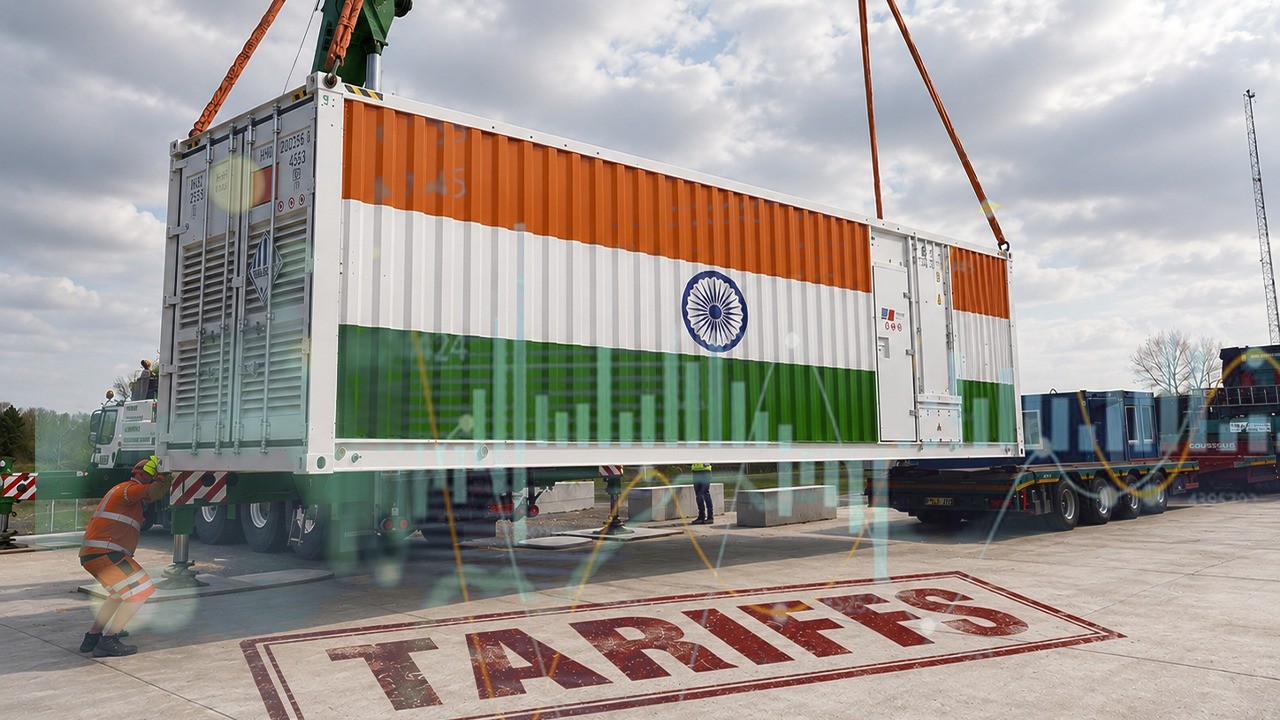
India’s Battery Energy Storage System (BESS) market has moved from pilot-scale experimentation to a full-blown tender economy, with 10.4 GW of standalone capacity awarded in 2025 alone. Yet the sector now sits at an inflection point where tariff design — not just cell cost — is becoming the single biggest determinant of project bankability. Three tariff regimes are converging simultaneously: standalone competitive-bid capacity tariffs under Viability Gap Funding (VGF), Time-of-Day (ToD) retail tariffs for commercial and industrial (C&I) consumers, and hybrid Solar+BESS bundled tariffs. Each is evolving at a different pace, and together they will define which BESS business models survive the next three years.

The Standalone Tariff Compression Story
Standalone BESS tariffs discovered through SECI and state DISCOM auctions have fallen sharply — from around Rs 10.83 lakh/MW/month in the earliest 500 MW/1,000 MWh SECI tender to a low of Rs 2.18/kWh-equivalent pricing by Q1 2026, a 14% quarter-on-quarter drop driven by falling LFP cell prices, larger project sizing, and cheaper PSU bank debt. VGF-backed projects have consistently cleared tariffs roughly 40% lower than non-VGF projects of similar specification, with Maharashtra and Rajasthan 2024 auctions settling at Rs 219,001–221,100/MW/month (about US$2,561–2,586/MW/month). The expanded 2025 VGF tranche — covering 30 GWh, with INR 5,400 crore in support projected to mobilize roughly INR 33,000 crore of investment — front-loads 70% of subsidy disbursement to Commercial Operation Date, materially improving early-stage cash flow and bankability versus the original 2023 scheme.

This compression, however, has now collided with a cost shock on the supply side. Currency depreciation, a rebound in lithium carbonate and electrolyte prices, and China’s phased withdrawal of VAT export rebates on battery products (9% to 6% from April 2026, to zero from January 2027) are together adding an estimated 25–30% to effective cell costs versus the assumptions baked into 2023–24 winning bids.

Because EPCs and integrators are locked into fixed-price rupee tariffs while procuring cells in dollars, this mismatch is now stalling execution — one analysis estimates roughly 75% of the contracted BESS pipeline is under stress, with tariffs having fallen 71% from earlier peaks even as input costs rise. The Central Electricity Regulatory Commission has already rejected at least one previously discovered BESS tariff over signing delays that misaligned it with prevailing market prices. This is the central tension for the next wave of Indian BESS economics: tender design assumed a monotonic cost decline curve that is no longer guaranteed.

Viability Gap Funding as the Structural Anchor
VGF is not a peripheral subsidy — it is the mechanism that currently makes standalone Indian BESS bankable at all. Under the Ministry of Power’s evolving framework, the VGF outlay per unit of storage has itself fallen dramatically, from an initial Rs 96 lakh/MWh estimate to Rs 46 lakh/MWh (or 30% of capex, whichever is lower) under the original scheme, and further to Rs 18 lakh/MWh under the 2025 tranche — reflecting genuine cost deflation captured into policy design. The scheme mandates that 85% of VGF-backed project output go to distribution companies, with the remainder available to other consumers, and requires a minimum 2-hour storage duration with a preferred 1.5 cycles/day utilization. Contracts now run 12–15 years under a build-own-operate model, with the National Load Dispatch Centre identifying peak-stress windows to optimize revenue capture and a BESS Balancing Pool (BBP) absorbing performance-linked surpluses and deficits.

This design matters for tariff economics because it converts BESS from a pure merchant-risk asset into a partially de-risked capacity asset — VGF is estimated to contribute around 40% of the revenue required for standalone storage to clear financial viability thresholds, with the remaining economics coming from merchant arbitrage and ancillary services. As VGF outlay per MWh keeps falling in step with battery costs, the government is effectively using tariff-based competitive bidding to transmit real-time cost signals into subsidy calibration — a structure that works well when costs fall, but creates friction (as seen in early 2026) when costs unexpectedly rise.
Time-of-Day Tariffs and the Rise of Behind-the-Meter Arbitrage
While standalone tenders dominate headlines, the Time-of-Day tariff mandate under the Electricity (Rights of Consumers) Amendment Rules, 2023 is quietly building the most durable BESS revenue stream: C&I demand-side arbitrage. ToD tariffs became mandatory for C&I consumers above 10 kW sanctioned load from April 1, 2024, with peak-hour multipliers of at least 1.20x normal tariff for C&I customers and solar-hour discounts of up to 80% of normal tariff, applied only to the energy charge component. As of the latest CEA data, 31 states and union territories have notified ToD tariff orders.

The practical effect has been a widening peak-versus-off-peak spread — reaching Rs 4–6/kWh in states like Maharashtra, Karnataka, and Gujarat — combined with new demand charges of Rs 400–600/kVA/month that create a second, independent BESS revenue stream through peak-shaving. This has driven cumulative behind-the-meter BESS installations from just 0.2 GWh at end-2023 to 1.2 GWh by April 2026, with textile, chemical, and food-processing manufacturers as the dominant adopters. A representative 5 MWh facility-level BESS with a Rs 5/kWh ToD spread and Rs 450/kVA demand charge shows roughly Rs 3.2 crore in annual savings against Rs 15 crore capex, yielding a simple payback of about 4.7 years. Because these tariffs are set independently by 31+ State Electricity Regulatory Commissions with varying peak windows and multipliers, C&I BESS economics remain fragmented by geography.

Hybrid Solar+BESS Tariffs: The Convergence Point
The third tariff track — hybrid solar+BESS bundled tenders — is where the market is converging fastest toward grid parity. In 2026 year-to-date, 12 GWh of coupled storage has been awarded alongside 8 GW of solar, with 67% of tenders specifying 4-hour BESS duration at roughly 50% of solar AC capacity. The lowest discovered hybrid tariff, Rs 3.42/kWh under SECI Tranche IV in Rajasthan, sits only about Rs 0.55/kWh above standalone solar pricing of Rs 2.85–2.95/kWh — the narrowest hybrid premium recorded to date. This compression is driven by sub-$85/kWh LFP cell pricing, standardized containerized BESS from Tier 1 integrators (Sungrow, Huawei, BYD, CATL), and PSU banks now financing hybrid projects at 9.0–9.4%, only marginally above standalone solar debt costs.

For DISCOMs, this tariff structure delivers firm, dispatchable solar during evening peak hours at roughly a 20% premium over standalone solar — a materially better deal than gas peaking or coal ramping alternatives. If the next SECI hybrid tranche (expected July 2026, targeting 1.5 GW solar plus roughly 2 GWh storage) clears below Rs 3.40/kWh, developer behavior is likely to shift decisively toward hybrid as the default BESS deployment model rather than standalone.
State-Level Incentive Mechanics: Sizing Allowances and Wheeling Waivers
State regulatory commissions have introduced structured policy incentives to promote early BESS adoption while managing grid stability. These frameworks utilize a combination of capacity sizing allowances, grid-charge waivers, and operational tax holidays.
Rajasthan’s 200% Captive Sizing Rule and Storage Mandate
Historically, captive renewable energy systems in Rajasthan were limited to 100% of the facilities contracted demand. Under the Rajasthan Electricity Regulatory Commission (RERC) Green Energy Open Access Regulations, this ceiling was doubled to 200% of contract demand.

To access this expanded capacity, consumers must integrate energy storage. Specifically, any capacity built between 100% and 200% of contract demand must carry a BESS sized to store at least 20% of the energy generated by that incremental slice. This rule allows industrial consumers to oversize solar installations to ensure consistent green power availability during low-generation periods, while using BESS to absorb surplus midday generation. Furthermore, any behind-the-meter BESS in Rajasthan is exempt from state Parallel Operation Charges (POC), which are typically levied on captive power plants at a rate of ₹11.90/kVA/month.
The 100% Wheeling and Transmission Charge Waiver
To encourage the co-location of storage with open-access renewable assets, RERC Regulation 11.3 established a graduated waiver on transmission and wheeling charges for a seven-year term. The waiver scales based on the co-located BESS-to-RE capacity ratio:
- The 5% Threshold: Installing a co-located BESS equivalent to at least 5% of the solar plants capacity unlocks an immediate 75% waiver on transmission and wheeling charges.
- The Graduated Scale: For every additional 1% increase in BESS capacity relative to the solar plant, the waiver increases by 1%.
- The 30% Gold Standard: Once the BESS-to-RE capacity ratio reaches 30%, the open-access consumer receives a 100% waiver on both transmission and wheeling charges.

For a textile factory in Rajasthan operating a 1 MW solar plant, installing a 300 kW / 600 kWh BESS (a 30% capacity ratio) unlocks the full 100% waiver. In a state where open-access wheeling and transmission charges range from ₹1.20 to ₹1.80 per unit, this waiver can generate significant annual savings. This regulatory exemption improves the economics of BESS, helping offset the upfront capital cost of the battery.
Madhya Pradesh’s Energy Storage Policy and Duty Holidays
Under the Madhya Pradesh Pumped Hydro Storage and Energy Storage Policy, developers receive a structured framework of fiscal incentives designed to reduce capital and operational costs:
- Electricity Duty Holiday: Eligible projects receive a 100% exemption on electricity duty for 10 years from the commercial operation date (COD) on both the charging energy and the stored energy supplied to the grid.
- Energy Development Cess Exemption: The state-level energy development cess is set to nil for a 10-year period from COD, improving project cash flows.
- Wheeling Charge Reductions: Projects receive a 50% waiver on wheeling charges for 5 years, with a 100% waiver for any power supplied directly to the state-run utility, MPPMCL.
- Double-Taxation Prevention: Pumping and charging energy are taxed only at the point of final consumption, preventing double taxation on energy conversion losses.
- Land and Stamp Duty Incentives: Developers receive a 65% reimbursement on stamp duty for private land purchases and concessional rates for government land allotments.

Discovered Tariffs and Project Viability: The Divergence of Tenders and Cost Curves
The rapid scale-up of utility-scale storage procurement has led to competitive tariff discovery, but has also raised concerns regarding the financial viability of low-tariff bids.
The Restructuring of Viability Gap Funding (VGF)
To reduce the upfront cost of battery storage, the Union Cabinet approved a Viability Gap Funding (VGF) scheme in September 2023. The evolution of this program shows how declining global technology costs have allowed the government to extend the reach of public subsidies without increasing the total budgetary allocation.

The reduction in the maximum VGF support rate from ₹96 lakh/MWh to ₹46 lakh/MWh (and subsequently to ₹16 lakh/MWh under Tranche 2) reflects a steep drop in underlying battery costs. Global LFP battery pack prices fell roughly 80% over the past decade, declining from ₹7.9 million (₹79 lakh) per MWh in 2015 to ₹1.7 million (₹17 lakh) per MWh in 2025. However, because the disbursement of VGF is structured in five tranches—10% at financial closure, 45% at commercial operation (COD), and 15% annually over the three years post-COD—developers must still secure substantial front-ended construction debt, exposing them to local interest rate risks.
Discovered Tariffs versus Viability Benchmarks
In 2025 and early 2026, competitive bidding for standalone 2-hour BESS projects discovered historically low tariffs. However, financial analysis warns that aggressive bidding has driven discovered tariffs below sustainable levels.
Against a calculated sustainable benchmark of ₹2.30 lakh per MW per month for a 2-hour, 2-cycle configuration, nearly 75% of the capacity allocated in 2025 (representing 5,165 MW out of 6,890 MW) is classified as at-risk. These projects face challenges in securing debt financing at viable rates, potentially leading to financial closure delays of up to 18 months.

In contrast, the 4-hour segment has shown stronger economic viability. Discovered tariffs for 4-hour standalone storage, such as UPPCLs allocation at ₹6.45 to ₹6.46 per kWh and SECIs peak-power tenders at ₹6.27 to ₹6.28 per kWh, align more closely with underlying cost structures, reducing execution risk.
Merchant Market Arbitrage and Open Exchange Dynamics
While utility-scale PPAs provide long-term revenue certainty, a parallel merchant market has emerged in India. Falling upfront costs and extreme midday price volatility on the power exchanges have made merchant operations commercially viable.
Price Volatility and Arbitrage Mathematics
The Indian short-term power market comprises bilateral trades, power exchange transactions, and ex-post deviation settlements under the Deviation Settlement Mechanism (DSM). The Indian Energy Exchange (IEX) accounts for approximately 84% of total exchange volumes and holds nearly a 100% share in the Day-Ahead Market (DAM) segment.
With solar energy now contributing a significant portion of midday generation, the grid regularly experiences solar energy surpluses. During summer and high-generation months, midday prices in the DAM and Real-Time Market (RTM) often fall close to zero (between ₹0.00 and ₹0.30 per kWh), as midday sell bids regularly outnumber buy bids.

In contrast, as solar generation drops off and residential cooling load peaks between 18:00 and 22:00, evening demand surges. This peak demand regularly pushes evening exchange prices to the regulatory ceiling of ₹10 per kWh in the standard market.
The resulting daily price spread allows BESS operators to capture arbitrage revenue by charging when midday solar generation drives exchange prices to near-zero levels, and discharging during the high-price evening peak.
The price cap for standard Day-Ahead and Real-Time markets is capped at ₹10/kWh.
However, in March 2023, the CERC introduced the High Price Day Ahead Market (HP-DAM) segment, which is capped at ₹20/kWh.

The HP-DAM segment allows high-variable-cost generators—such as imported-coal plants, gas-based plants, and BESS assets—to bid up to the ₹20/kWh ceiling during grid stress events, providing an additional revenue path for merchant storage.
The revenue potential for exchange-based operations is further shaped by the roll-out of market coupling. In July 2025, the CERC issued a suo motu order to coupling the Day-Ahead Markets of all power exchanges (IEX, PXIL, and HPX) using a centralized round-robin clearing system. This synchronization is designed to harmonize prices across exchanges, reducing regional price dispersion and creating a more predictable price signal for merchant BESS operations.
What This Means for BESS Economics Going Forward
The next wave of Indian BESS economics will be shaped less by a single national tariff and more by the interaction of three regimes moving at different speeds. Standalone tariffs are being squeezed between falling VGF outlay per MWh and rising underlying cell costs, creating real execution risk for projects contracted on 2023–24 assumptions. ToD tariffs are creating a durable, geography-specific C&I arbitrage market that rewards behind-the-meter deployment independent of central tender cycles. Hybrid solar+BESS tariffs are converging toward grid parity fastest and may become the default utility-scale configuration if the July 2026 SECI tranche clears below Rs 3.40/kWh.

For manufacturers and system integrators, the practical implication is that tariff exposure needs to be underwritten project-by-project rather than assumed generically: standalone bids require explicit currency and China-policy risk clauses given the 25–30% cell cost inflation already observed, while C&I behind-the-meter offerings should be priced against state-specific ToD spreads and demand charges rather than a national average. India’s CEA projects storage requirements rising from 82 GWh in 2026-27 to 411 GWh by 2031-32, meaning tariff design decisions made over the next 12–18 months will disproportionately shape which BESS business models — VGF-anchored standalone, ToD-driven C&I, or hybrid-bundled — capture that growth.
No Responses